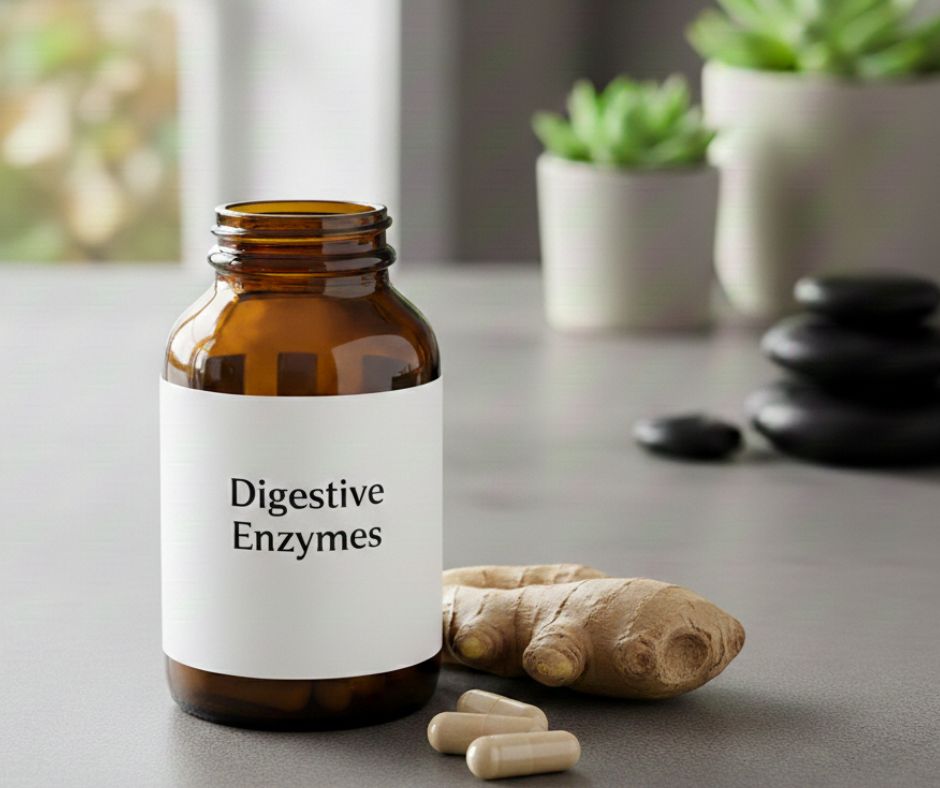
Digestive enzymes are an increasingly popular remedy Earth Clinic readers use for acid reflux, GERD, and post-meal heartburn—especially when symptoms are linked to slow digestion, bloating, or a heavy feeling after eating. Rather than neutralizing acid, enzymes work upstream by helping food break down efficiently, reducing gas and pressure that force stomach contents upward.
In 2026, reflux is often understood as a timing and breakdown problem rather than an acid excess problem. Digestive enzymes fit squarely into that modern framework.
2026 Insight: For many people, reflux improves when digestion speeds up and gas production decreases. Digestive enzymes reduce reflux by improving gastric emptying and lowering internal pressure—not by suppressing stomach acid.
Why Digestive Enzymes May Help Acid Reflux
Reflux frequently occurs when food sits too long in the stomach or backs up from the small intestine. Poor breakdown allows fermentation, creating gas that pushes the Lower Esophageal Sphincter (LES) open.
- Improve food breakdown: Less fermentation and gas
- Support faster gastric emptying: Reduced upward pressure
- Help “close the door” (LES): An empty stomach signals the LES to stay shut
- Support low-acid digestion: Improves breakdown without neutralizing acid
Bromelain & Papain: The Plant-Based Protease Advantage
While many enzyme blends list “protease,” two specific plant-based enzymes are frequently discussed by Earth Clinic readers:
- Bromelain (from pineapple)
- Papain (from papaya)
These enzymes have a key advantage for reflux sufferers: they function across a wider pH range than many animal-derived enzymes. This makes them especially helpful when stomach acidity fluctuates from meal to meal.
Plant-Based Edge: Bromelain and papain can continue working even when stomach acid is low—making them a gentler first-line option for reflux linked to sluggish digestion.
The Chewable Enzyme Trap
Many over-the-counter “papaya enzyme” tablets are chewable—and that can be a problem.
- Often contain sugar, sorbitol, or xylitol
- Sugar alcohols can ferment rapidly
- Fermentation creates gas that worsens reflux
For reflux sufferers, capsules or low-sugar powders are usually better tolerated than sweet chewables or enzyme mints.
Digestive Enzymes and the LES (Lower Esophageal Sphincter)
One of the most important 2026 insights is how enzymes influence LES behavior.
When the stomach empties efficiently, the body sends a signal to keep the LES tightly closed. When food lingers, the LES often stays relaxed—allowing reflux.
The Signaling Theory: Enzymes help move food out of the stomach faster. A “cleared” stomach signals the LES to shut, reducing reflux episodes.
Pancreatic Insufficiency, Fat Digestion & Reflux
Sometimes reflux isn’t coming from the stomach at all—but from pressure building in the small intestine.
If reflux is worse after fatty meals, poor fat digestion may be causing a backup that pushes acid upward.
- Look for Lipase: Helps digest fats
- Ox bile: Can support bile flow for fat processing
- Small intestine relief: Less back-pressure means less reflux
This pattern is more common after gallbladder issues, with aging, or in people who feel heavy or nauseous after fats.
How to Take Digestive Enzymes for Reflux
Typical Reader Method:
- Take enzymes right before the first bite of a meal
- Use with larger or protein- or fat-heavy meals
- Start with the lowest effective dose
The “Burning Test” (Important Diagnostic Clue)
Digestive enzymes should not cause stomach pain.
The Gastritis Caution: If a high-protease enzyme causes a burning sensation in the stomach (not the throat), it may indicate a thinning stomach lining or hidden ulcer. Stop enzymes and focus on coating remedies like aloe vera or slippery elm first.
This “burning test” is one of the clearest signals that healing the lining must come before improving digestion speed.
Enzyme-Rich Foods: Natural Digestive Boosters
Earth Clinic readers often combine supplements with whole-food enzyme sources:
- Fresh pineapple: Natural bromelain
- Fresh papaya: Natural papain
- Ginger: Supports motility and digestion
- Sauerkraut juice: Fermented enzymes (small amounts only)
These foods can help “prime the pump” before meals and may reduce reliance on supplements.
Digestive Enzymes and Silent Reflux (LPR)
For silent reflux (LPR), enzymes may reduce the pressure that pushes pepsin upward—but they do not neutralize pepsin itself.
For best results, enzymes are often paired with mucosal protectants such as aloe vera or slippery elm.
When Digestive Enzymes May Not Be a Good Fit
- Active ulcers or gastritis flares
- Histamine intolerance (some blends are fermented)
- High-dose overuse (can cause cramping)
Getting to the Root Cause
Digestive enzymes can dramatically reduce reflux symptoms—but lasting relief comes from identifying why digestion is impaired, whether due to low stomach acid, pancreatic insufficiency, microbiome imbalance, stress, or poor chewing.
Have digestive enzymes helped your acid reflux or GERD? Please share your experience so others can learn what worked for you.