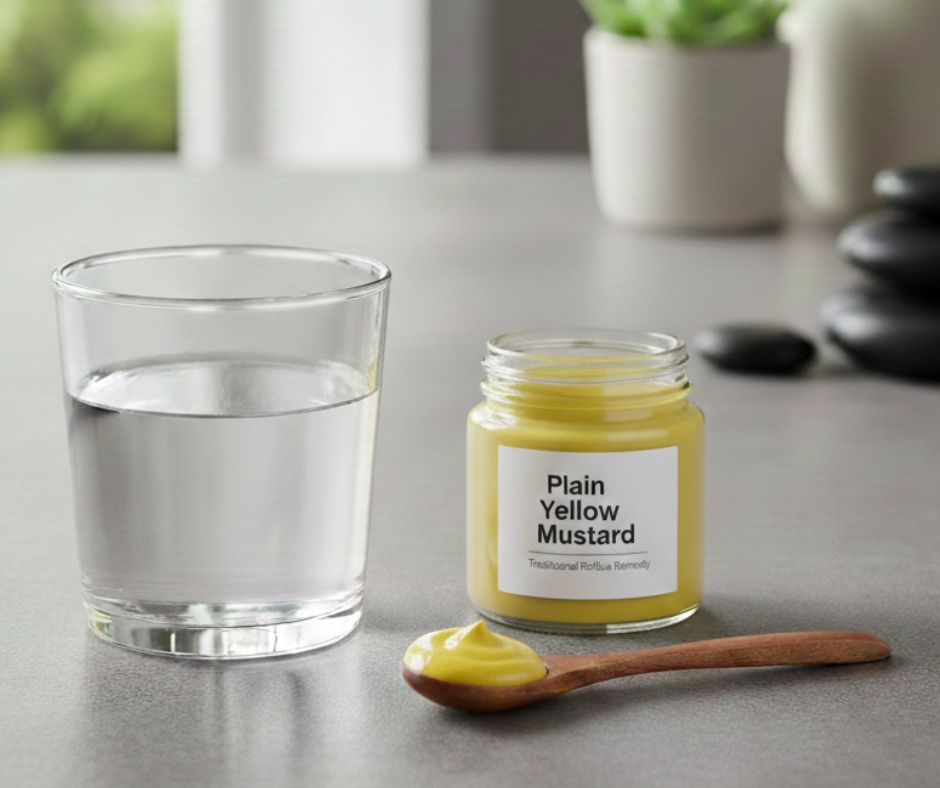
While it may sound counterintuitive, mustard works very differently from antacids or baking soda. Instead of suppressing acid, mustard appears to help the digestive system reset its rhythm, reduce pressure, and calm esophageal spasms.
Mustard is a surprisingly popular home remedy Earth Clinic readers use for acid reflux and heartburn. Many report that a small amount of plain yellow mustard can stop reflux symptoms within minutes—especially during sudden flare-ups after heavy or greasy meals.
While it may sound counterintuitive, mustard works very differently from antacids or baking soda. Instead of suppressing acid, mustard appears to help the digestive system reset its rhythm, reduce pressure, and calm esophageal spasms.
2026 Insight: Mustard often helps reflux by stimulating digestion, activating saliva flow, and signaling the gut–brain axis—rather than by neutralizing acid.
Why Mustard May Help Acid Reflux
Mustard seeds and traditional yellow mustard contain a unique combination of compounds that may support reflux relief:
- Acetic acid (from vinegar): Can support digestion in people with low stomach acid
- Turmeric: The natural yellow color of classic mustard; provides a mild, localized anti-inflammatory effect
- Minerals: Small amounts of potassium and magnesium
- Digestive stimulation: May encourage faster stomach emptying, reducing upward pressure
The Turmeric Factor: Why Plain Yellow Mustard Matters
Many people overlook why traditional yellow mustard works better than “fancier” varieties.
Double Action: Yellow mustard delivers a one-two effect—the vinegar supports low-acid digestion, while the turmeric provides gentle anti-inflammatory support to the stomach lining.
Dijon, spicy brown, or gourmet mustards often lack turmeric and may have different vinegar balances or added spices that make them less reliable for reflux relief.
How to Use Mustard for Acid Reflux
Most Common Reader Method:
- 1 teaspoon of plain yellow mustard
- Swallow straight or with a small sip of water
- Use at the first sign of heartburn
Relief is often reported within 5–10 minutes. Some people notice a brief warming or tingling sensation before symptoms fade.
The Saliva Effect: A Natural Acid Buffer
One of mustard’s most overlooked benefits is how strongly it stimulates saliva.
- Mustard is a sialagogue: It triggers a rapid increase in saliva production.
- Saliva is alkaline: It naturally contains bicarbonate.
- Mechanical relief: The surge of saliva helps wash the esophagus and buffer acid.
For many readers, this saliva response explains why relief can feel almost immediate.
The Vagus Nerve & “Sensory Reset” Theory
In 2026, reflux is increasingly viewed through the lens of the gut–brain axis.
Sensory Reset: The sharp, pungent taste of mustard may briefly “shock” the vagus nerve, helping interrupt esophageal spasms and reset digestive signaling that feels like reflux.
This may be why mustard sometimes works when milder remedies fail.
Acidic Going In, Alkalizing Going Out
Although mustard is acidic in the jar due to vinegar, some people experience an alkalizing effect after digestion.
- The paradox: The initial acidity may help close the Lower Esophageal Sphincter (LES).
- After metabolism: Minerals such as potassium and magnesium may help stabilize the system.
This dual action may explain why mustard can stop reflux without causing rebound symptoms for some users.
What Type of Mustard Works Best?
Best Choice: Plain yellow mustard made from mustard seed, vinegar, salt, and turmeric.
The 2026 “Clean Label” Check: Avoid mustards with polysorbate 80, artificial dyes (like Yellow 5), or sweeteners. For a sensitive gut, these additives can increase inflammation.
When Mustard Works Best
- Sudden heartburn after greasy or heavy meals
- Occasional reflux without chronic inflammation
- Reflux that improves with digestive stimulation
When Mustard May Make Reflux Worse
Use Caution If You Have: gastritis, ulcers, silent reflux (LPR), or severe throat irritation. Mustard may be too stimulating for inflamed tissue.
- Silent reflux (LPR): Acidic foods may reactivate pepsin in the throat
- Gastritis: Vinegar and spices can worsen burning
- Sensitive esophagus: May sting during flares
Sodium Warning
Mustard contains a meaningful amount of sodium.
- Use caution if you are on a low-sodium diet
- Avoid frequent use if you have high blood pressure or kidney disease
For most people, occasional use is unlikely to be an issue, but daily or repeated dosing can add up.
How Often Can Mustard Be Used?
Most Earth Clinic readers use mustard occasionally, not daily. It is best treated as a situational remedy rather than a long-term solution.
If you find yourself relying on mustard frequently, it may be time to look deeper into root causes such as meal timing, bloating, posture, or low stomach acid.
Getting to the Root Cause
Mustard may stop symptoms quickly, but lasting relief usually requires addressing why reflux is happening. Consider evaluating:
- Meal size and late-night eating
- Bloating or fermentation after meals
- Stress-related digestion and vagus nerve tone
- Posture and gravity during sleep
Explore the main acid reflux guide for deeper strategies and reader-tested solutions.
Have you tried mustard for acid reflux? Please share your experience to help others learn what worked for you.