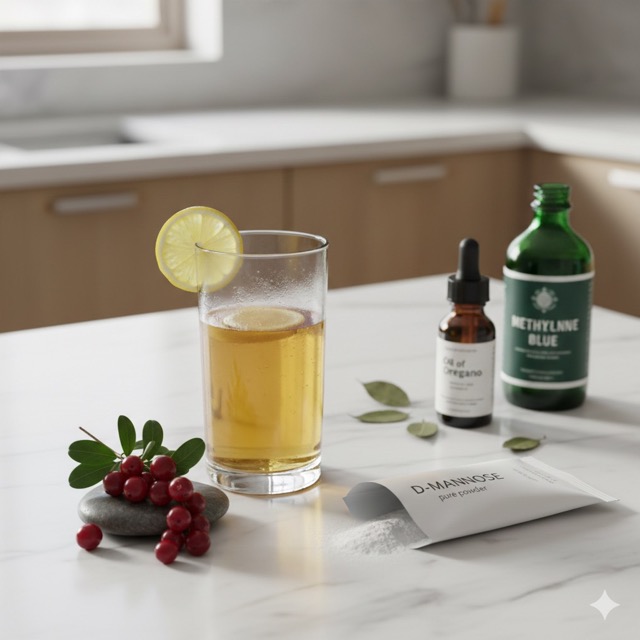
Bladder infections (UTIs) occur when bacteria—most often E. coli—colonize the urinary tract. In 2026, many people focus on a layered strategy: block bacterial adhesion, disrupt protective biofilms, and support the urinary and vaginal microbiome.
Many readers report the best results when they act early—at the first “tingle,” burn, or urgency. The goal is to flush bacteria, reduce irritation, and prevent attachment.
| Type | Action | Common timing |
|---|---|---|
| Adhesion blocker | D-mannose in water | Repeated doses during day one |
| Soothing alkalizer | Baking soda in water | Short-term use (often day one only) |
| Supportive acid | ACV diluted in water | One to three times daily |
| Biofilm support | NAC or enzyme-based products | Empty stomach if used |
If D-mannose helps briefly and symptoms return, some people suspect an “embedded” infection pattern. Biofilms can incorporate minerals and proteins to form a protective layer that reduces exposure to antimicrobials.
D-mannose does not kill bacteria directly. Instead, it helps prevent certain E. coli strains from sticking to the bladder wall so they can be flushed out during urination.
Methylene blue is sometimes discussed for stubborn cases because it is excreted through the urine. It can turn urine blue or green. If you use it, confirm product quality and review medication interactions first.
Uva ursi is a traditional short-term bladder herb, while corn silk tea is commonly used to soothe irritation and support comfortable urination.
An apple cider vinegar (ACV) sitz bath is one of the most effective remedies reported on Earth Clinic for rapid relief from UTI burning, pressure, and urgency. This remedy works only when used in a very shallow dish of water with a strong vinegar concentration.
This is NOT a bathtub soak.
How to use:
Earth Clinic readers report that this concentrated method often relieves burning within minutes. It works by rapidly acidifying the external tissues and discouraging bacterial activity at the urethral opening.
This remedy provides fast symptom relief and works best when paired with internal support such as D-mannose or increased hydration.
The urinary tract is not sterile. Many researchers and clinicians now emphasize that a healthy urinary ecosystem is strongly influenced by vaginal flora. Lactobacillus crispatus is a key protective strain often associated with reduced UTI recurrence.
For women in peri-menopause or menopause, GUSM (genitourinary syndrome of menopause) can feel like a UTI even when cultures are negative. Lower estrogen can thin and irritate urinary and vaginal tissues, increasing burning, urgency, and discomfort.
Natural remedies are best for uncomplicated UTIs. Seek medical care promptly if you have:
The Earth Clinic community has shared over five hundred UTI success stories.
Scroll down to see which remedies are trending and which combinations helped the most.





