Methylene blue (MB) is a synthetic dye with a long clinical history in medicine, including use for methemoglobinemia and other hospital-based indications. In 2026, methylene blue is also widely discussed for its potential roles in mitochondrial function, redox balance, and neuroprotection, though much of the newer excitement comes from preclinical and early-stage human research rather than established standard-of-care use for longevity or neurodegenerative disease.33, 35
2026 Research Context: Modern discussions often blend (1) approved medical use (e.g., methemoglobinemia) with (2) investigational research on mitochondria and brain function. Many findings are animal or cell studies, and some clinical data are limited or mixed depending on the formulation and endpoint.12, 33, 35
Critical Safety Warning (MAOI / Serotonin Syndrome): Methylene blue can act as a potent MAOI. Combining it with SSRIs, SNRIs, other serotonergic drugs (and certain opioids) can trigger serious or fatal serotonin syndrome. Do not combine methylene blue with medications unless a clinician explicitly confirms safety for your situation.17, 3
What Is Methylene Blue?
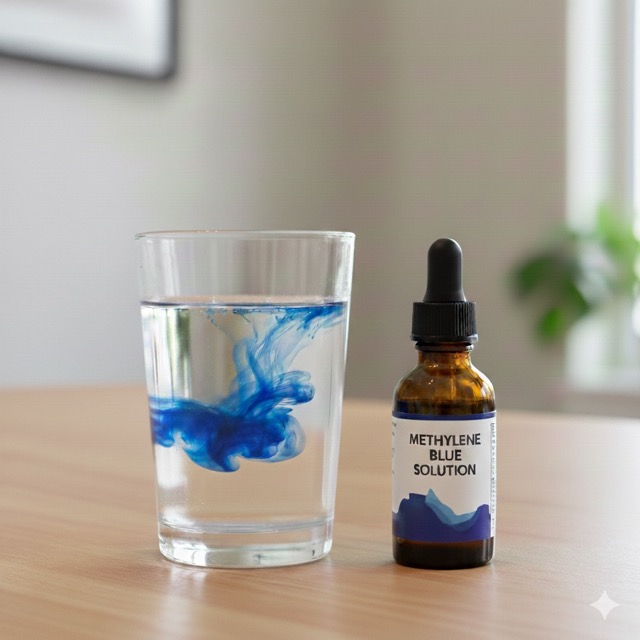
Methylene blue is a synthetic dye and medicinal compound. In dry form, it appears as a dark green powder. When dissolved in water, it becomes a vivid blue solution, which is why it has been used as a staining agent in medical diagnostics.
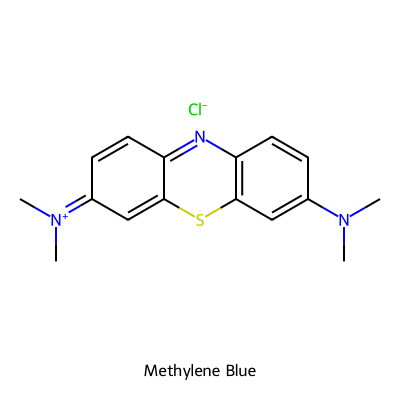
The chemical structure of methylene blue
Pharmaceutical grade matters: For medical discussion, methylene blue should be USP / pharmaceutical-grade. Industrial dye, aquarium products, or laboratory dyes may contain contaminants (such as heavy metals) and should not be used internally.
How Methylene Blue Works (Simplified)
Methylene blue is discussed as a “cellular support” compound because of how it interacts with electron transfer and oxidative balance. In simplified terms, research describes methylene blue as a compound that can: