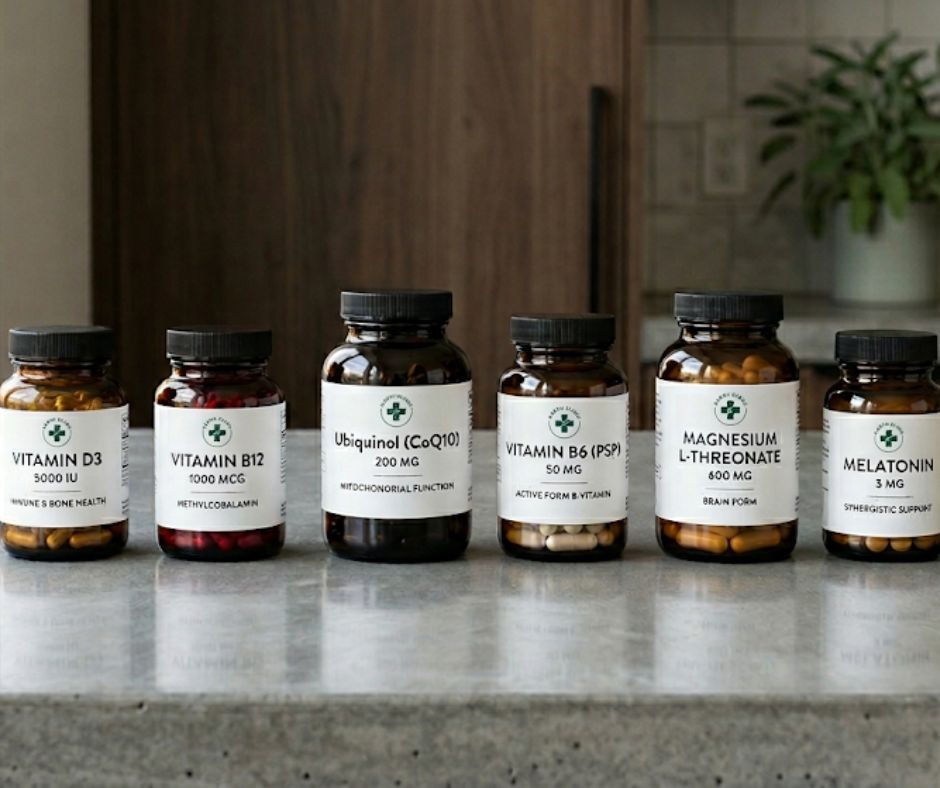
There are many supplements that are on the low side when it comes to Parkinson's disease (PD). Here is a list of several of those :
1. Vitamin D - Probably one of the best known deficiencies in PD and very beneficial if replenished. Vitamin D has a myriad of roles in the human body, not all of which have been discovered yet. We were born under the sun and adapted to make the most of that exposure and vitamin D is a very important part of that evolution.
2. Vitamin B12 - Another very important deficiency in PD. Reduced energy levels and increased potential for anemia. Low B12 also raises homocysteine levels and the gold standard treatment for PD can reduce B12 also and raise homocysteine levels. These elevated homocysteine levels are associated with accelerated disease progression. So getting B12 levels tested and adjusted appropriately are very important in PD. B12 also works against peripheral neuropathy (PN) which is significantly more common in PD estimated as high as 30 - 55% in people with PD, but only 8 to 9% in non PD.
3. CoQ10 / Ubiquinol - This is important because mitochondrial dysfunction is a hallmark of PD. Improving this common deficiency can go a long way toward improving mitochondrial function and increasing ATP production while using its specific antioxidant activities to further protect the mitochondria. Optimal mitochondria function is very important in PD and to human health, no matter the disease.
4. Vitamin B6 - Only In The Form Of P5P - Deficiency is common in PD and again is at least partially driven by the gold standard treatment of Carbidopa/Levodopa (CL) which depletes B-6 and can add to the homocysteine burden. Too low and too high levels of B6 can lead to peripheral neuropathy. So getting your B6 level and B12 levels checked fairly regularly is very important in PD to make sure they are optimal. When supplementing B6 for PD, it is important not to take it near the same time as your C/L dose as the carbidopa can bind to the active form of B6, working against the supplement. P5P is the best way to take B6.
5. Magnesium - Has been shown to be lower in the brain of people with PD, while be normal or higher in the blood. Using what is thought to be a more brain targeted form of magnesium, Magnesium L threonate, that can cross the blood brain barrier (BBB) and can help restore the lower magnesium brain and cerebrospinal fluid levels (CFL) seen in people with PD. This is important because magnesium can help protect the dopamine producing neurons and lower inflammatory levels in the brain. Preserving these neurons is very important in PD because once they are gone, the body does not appear to have a known mechanism to regenerate these specific neurons. Other forms of magnesium have shown the ability to also cross the BBB, but Magnesium L Threonate is studied for this very specific purpose more than the other forms.
6. Melatonin - These levels decline with age, but decline even further in people with PD. This is very important because melatonin has shown in human PD studies to offer measurable and significant benefit for mitochondria, brain, gut microbiome and the heart. Melatonin also works synergistically with vitamin D and magnesium and it increases and enhances the vitamin D receptor (VDR) making vitamin D work more effectively with clearer signaling. Melatonin offers significant anti inflammatory effects, neural protection, crosses the blood brain barrier, offers potent antioxidative stress effects and helps prevent cell death from apoptosis.
These are 6 important supplements that decline in PD to a greater extent than in healthy controls and bringing their levels up to par can help improve the quality of life for people with PD and potentially slow disease progression. These 6 supplements do much more than the brief explanations I gave for each one and they also have synergy among them, which is also important.
There are many other supplements that are beneficial for PD such as Inulin/FOS, which can increase the depleted short chain fatty acids (SCFAs), especially butyrate, to improve the gut dysbiosis which is very frequently seen in PD. Given that newer science is starting to think in terms of gut dysbiosis as a potential avenue of PD from the gut to the brain, SCFAs and promoters of SCFAs, such as Inulin/FOS are starting to move to the forefront of the latest research.
Astaxanthin, which can cross the BBB and is a potent anti inflammatory and potent inhibitor of reactive oxygen species (ROS) while offering significant neural protective effects.
EXERCISE has the most research to suggest potential to slow disease progression.
This combination of the above can be a potential game changer for people with PD if utilized on a daily basis.
Art
About The Author
Art Solbrig is a researcher who has been reading scientific studies and testing natural remedies for over 30 years searching for useful studies and alternatives that apply positively to human health issues and natural treatments using minerals, vitamins, amino acids, essential oils, herbs, homeopathy, colloidal silver, combination treatments and other alternatives to improve the quality of life of others by writing about his findings and test results in places like Earth Clinic. He documents and writes about many of his experiences in helping others. Art is a native of sunny California.
