Splenic Flexure Syndrome is a painful but often misunderstood condition caused by trapped gas at the sharp bend of the colon under the left rib cage. The pain can be intense — sometimes mimicking heart trouble — and often sends people searching for immediate relief.
Because this is a mechanical gas entrapment issue, the correct remedy is not always what people instinctively reach for. This 2026 Earth Clinic guide focuses on what works — and what can make it worse.
Quick Nav:
▪ What Is Splenic Flexure Syndrome?
▪ Critical Fiber Warning
▪ Methane vs Hydrogen Gas
▪ Immediate Gas Release Techniques
▪ Upright “Hula Hoop” Protocol
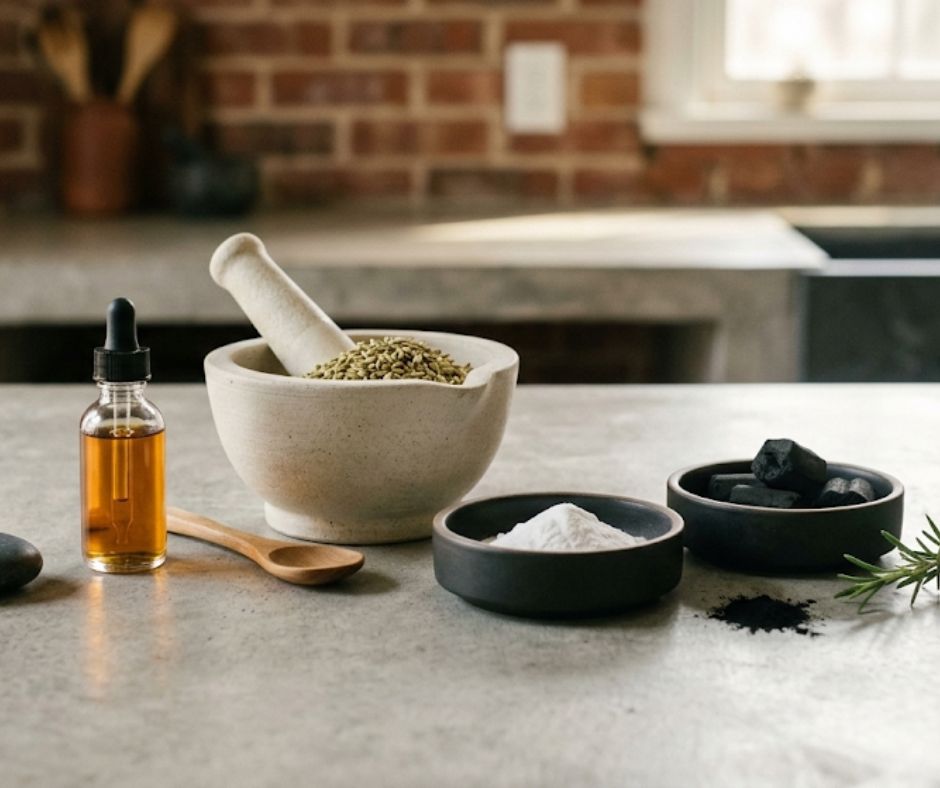
▪ Fennel & Asafetida Stack
▪ Magnesium for Motility
▪ Dietary Adjustments
▪ When to Seek Care
What Is Splenic Flexure Syndrome?
The splenic flexure is the sharp bend in the colon near the upper left abdomen. Gas rises naturally. When it collects and becomes trapped in this bend, pressure builds.
Pain can radiate to:
- Upper left abdomen
- Left shoulder
- Chest wall
- Upper back
It is often associated with constipation, IBS, slow motility, or high fermentation.
Critical Warning: Do NOT Use Bulk Fiber During Acute Pain
Do NOT treat acute Splenic Flexure pain with bulk-forming fiber supplements (Psyllium, Metamucil, etc.).
When pain is severe, many people instinctively take a large fiber supplement. This can be a serious mistake.
Splenic Flexure Syndrome is a mechanical gas obstruction at a colon bend. Adding bulk to that obstruction — especially without large amounts of water — can create a dense impaction at the splenic flexure itself.
This can escalate discomfort into severe constipation or even bowel blockage.
During acute pain, focus on motility and relaxation — not bulk.
Methane vs Hydrogen Gas (2026 Insight)
Not all gas behaves the same.
Hydrogen Gas (H₂):
- Rapid bloating after high-FODMAP foods
- Explosive discomfort
- Responds well to peppermint
Methane Gas (CH₄):
- Associated with constipation
- Heavy, constant pressure feeling
- Slows motility
- Common in Splenic Flexure Syndrome
If your pain feels like heavy, immobile pressure rather than quick bloating, prioritize motility support (Magnesium section) over just carminatives.
Knee-to-Chest Rocking:
- Lie on your back.
- Pull knees toward chest.
- Gently rock side to side.
Heat: Apply a heating pad under the left rib cage.
Clockwise Massage: Follow the colon direction gently.
Upright Gas Release: The “Hula Hoop” Protocol
Curling up often makes the bend tighter. Movement is better.
1. Hula Hoop Circles
- Stand upright.
- Make large, slow clockwise pelvic circles.
- Continue for 2–3 minutes.
This physically shifts the colon bend and can dislodge the trapped pocket.
2. The Left-Side Stretch
- Take a large step forward.
- Lift left arm overhead.
- Lean gently to the right.
This creates space under the left rib cage to “un-pinch” the splenic flexure.
Traditional Fennel + Asafetida (Hing) Stack
For severe trapped gas, traditional medicine uses a small but powerful combination:
- 1/4 tsp fennel seeds
- 1 pinch (about 1/16 tsp) asafetida powder (hing)
Take with warm water.
Asafetida is intensely sulfuric-smelling but is a strong anti-spasmodic. It helps the colon “release its grip,” while fennel disperses gas.
This is often more effective than peppermint alone for severe splenic bend gas.
Magnesium for Motility (Especially Methane Gas)
Magnesium citrate or oxide can gently stimulate bowel movement and reduce stagnation.
Start low and increase slowly to avoid diarrhea.
Methane-dominant gas responds best to improved motility.
Dietary Adjustments
- Reduce high-FODMAP foods
- Limit carbonated drinks
- Eat slowly
- Avoid overeating at night
If episodes are chronic, investigate underlying constipation patterns.
When to Seek Medical Care
- New chest pain
- Severe vomiting
- Blood in stool
- Fever with abdominal pain
- Persistent obstruction symptoms
Splenic Flexure Syndrome is uncomfortable but generally benign, once serious causes are ruled out.
Share Your Experience: What helped release trapped gas for you — asafetida, magnesium, movement, or another method?
