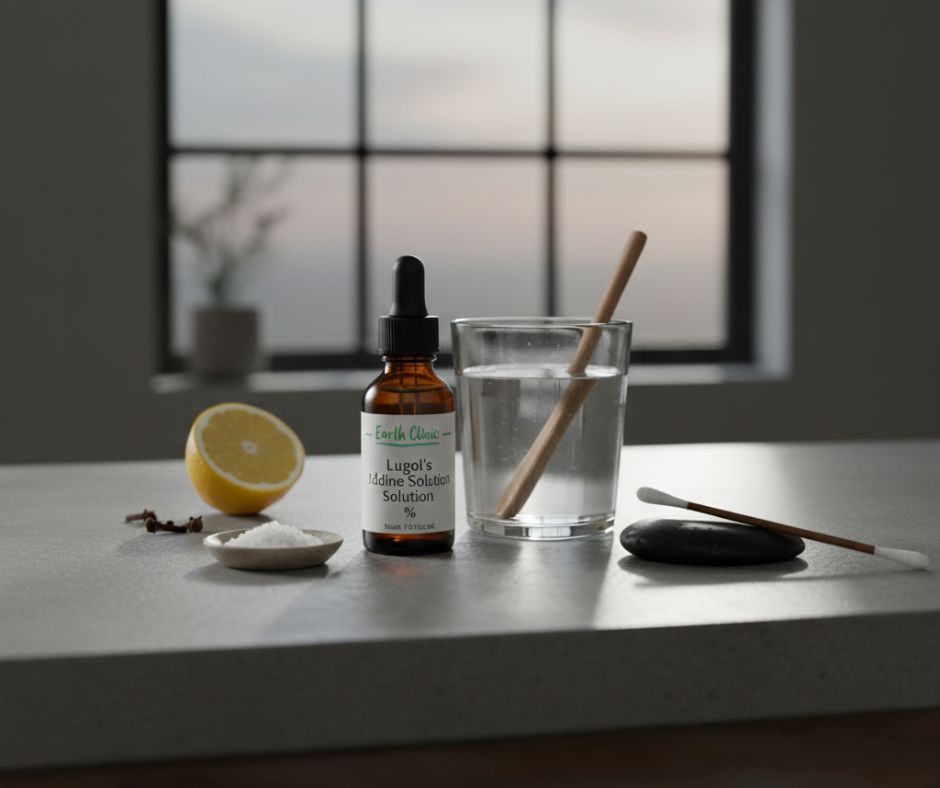
A sore throat can arise from viral infections, bacterial overgrowth, post-nasal drip, reflux irritation, or immune stress. Because iodine is both a powerful antiseptic and an essential trace mineral, many people search for iodine-based sore throat remedies—ranging from traditional external applications to modern antiseptic gargles.
This article explains the three main iodine approaches used for sore throat relief—external painting, antiseptic gargling, and historical throat paints—so readers can understand when each method may be appropriate, how they differ, and how to use them safely.
Important Medical Disclaimer: Iodine & Thyroid Health
Iodine directly affects thyroid function and immune signaling. Even when used topically or as a gargle, some systemic absorption may occur. If you have Hashimoto’s disease, hyperthyroidism, are pregnant or breastfeeding, or take thyroid or lithium-based medications, consult a healthcare professional before using iodine in any form.
Understanding Iodine Use for Sore Throat Relief
Iodine works differently depending on how and where it is applied. Confusion often arises because the same mineral is used in multiple ways:
- External iodine painting – applied to skin over lymphatic or glandular areas
- Povidone-iodine gargles – used directly on throat tissues
- Throat paints (e.g., Mandl’s Paint) – iodine combined with glycerin for mucosal contact
Each method has a different goal and risk profile.
Internal vs. External (2026 Trend): External painting on the neck is used for lymphatic and glandular support, while iodine gargling delivers a direct antimicrobial effect to the tonsils and throat tissues. Many Earth Clinic readers report using both—gargling for throat pain and painting for swollen glands.
Povidone-Iodine Gargle (Direct Antiseptic Action)
In 2026, the most common search intent for “iodine and sore throat” refers to povidone-iodine (PVP-I) gargles. This method is widely studied and used in clinical settings.
Why it works: Povidone-iodine is a broad-spectrum antiseptic shown in clinical studies to significantly reduce viral and bacterial load in the oral cavity when used as a diluted gargle.
Typical Gargle Method (Non-Ingested)
- Use povidone-iodine 10% (e.g., Betadine)
- Dilute to ~1% (about 1 part iodine to 20 parts water)
- Gargle for 20–30 seconds
- Spit out — do not swallow
- Use 1–2 times daily for short periods
This approach is best suited for acute viral or bacterial sore throats, especially when pain is localized to the tonsils or back of the throat.
External Iodine Painting (Lymphatic & Glandular Support)
External iodine painting involves applying iodine to the skin—typically the neck or wrist veins. This method is rooted in traditional medicine and is thought to support:
- Lymphatic drainage
- Swollen cervical glands
- Local immune signaling
While some systemic absorption may occur, this method is not a direct antimicrobial treatment for throat infections. It is better viewed as supportive rather than primary therapy.
Important Clarification: The “Iodine Absorption Test” Myth
A common belief is that if iodine “disappears quickly” from the skin, it indicates deficiency. This is a myth. Disappearance time is largely influenced by skin temperature, evaporation, and friction—not iodine status.
True iodine status is best assessed through dietary history, urinary testing, or professional evaluation.
Mandl’s Paint: The Historical Bridge
Readers searching for “iodine painting” often expect to hear about Mandl’s Paint—a traditional formulation of iodine combined with glycerin.
Why it matters: Glycerin helps iodine adhere to the mucous membranes of the throat, allowing longer contact time than a quick gargle but without relying on skin absorption.
Mandl’s Paint represents the middle ground between:
- External skin painting (indirect support)
- Quick antiseptic gargles (direct but brief contact)
Because iodine can irritate sensitive tissues, this method should be used cautiously and sparingly, and only with properly diluted, medical-grade formulations.
Which Iodine Method Should You Choose?
- Sharp throat pain, tonsil involvement: Povidone-iodine gargle
- Swollen neck glands: External iodine painting
- Persistent throat irritation: Consider gentler remedies first (honey, aloe, marshmallow root)
Iodine is a powerful tool—but it is not always the first or safest choice for every sore throat.
Precautions & Contraindications
- Avoid iodine if you have known thyroid disease unless medically supervised
- Do not ingest topical iodine or gargle solutions
- Avoid long-term or high-frequency use
- Discontinue if irritation, palpitations, or discomfort occurs
- Seek medical care for fever, difficulty breathing, or persistent symptoms
Have You Tried Iodine for a Sore Throat?
Scroll down to read Earth Clinic reader experiences or share what worked—or didn’t—for you.
Related Links:
Natural Sore Throat Remedies: 10 Fast-Acting Community Favorites

