Urinary Crystals in Cats
Natural Remedies

Natural Support for Urinary Crystals in Cats: Hydration, Diet, and Care

| Modified on Mar 19, 2026
Add New Post Comments
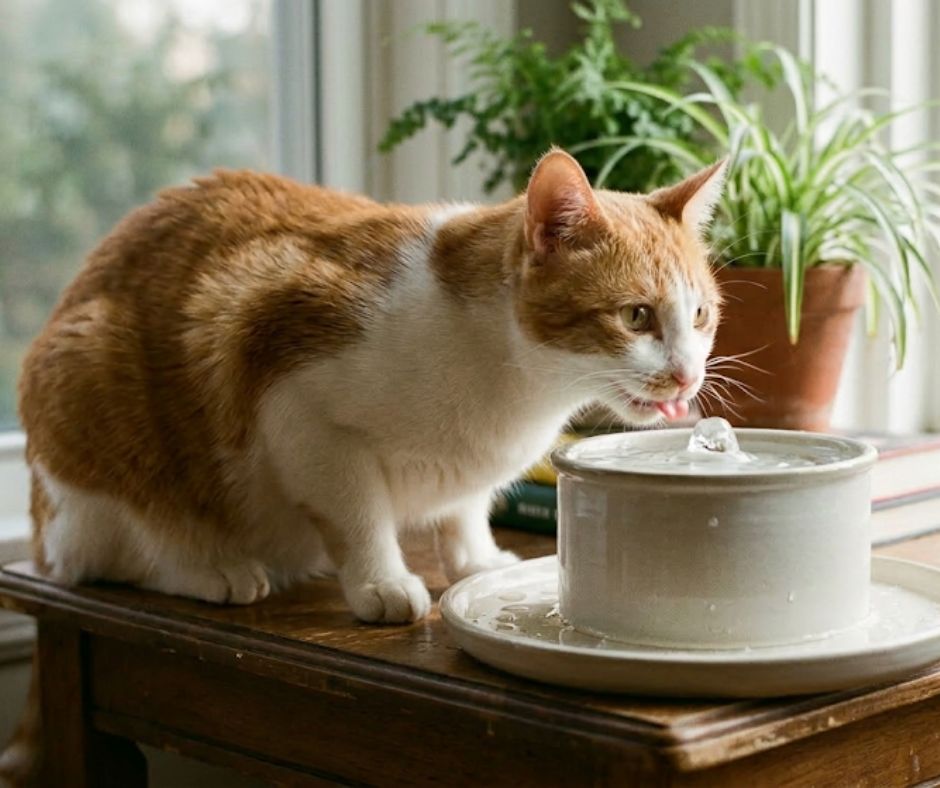
Cat drinking from fountain.

Urinary crystals in cats can range from a minor finding to the beginning of a painful and potentially dangerous urinary condition. Some cats show no symptoms, while others develop inflammation, recurrent discomfort, bladder stones, or life-threatening blockage.

This Earth Clinic guide focuses on practical, natural strategies to support urinary health—especially hydration, diet, stress reduction, and targeted bladder support—while also explaining the critical details needed to prevent worsening of the condition.

Quick Nav:

What Urinary Crystals Are
Struvite vs. Calcium Oxalate
Urine pH Explained
Crystals vs Stones
Common Signs
Emergency Warning
Hydration
Diet & Transition Tips
Stress Triggers
Litter Box (n+1 Rule)
Targeted Natural Remedies
Home Diet Warning
What to Avoid
FAQ


What Urinary Crystals Are

Urinary crystals are microscopic mineral formations that develop when urine becomes concentrated or imbalanced. They can irritate the bladder and may lead to stone formation if conditions persist.


Struvite vs. Calcium Oxalate

  • Struvite: Forms in alkaline urine and often responds to diet changes.
  • Calcium oxalate: Forms in acidic urine and does not dissolve easily.

Urine pH Explained

  • Struvite → alkaline urine
  • Oxalate → acidic urine

Ideal target: ~6.0–6.5

Do not adjust urine pH without knowing crystal type.


Crystals vs Stones

  • Crystals: Microscopic (sand-like)
  • Stones: Larger, require veterinary care

Common Signs

  • Frequent urination
  • Straining
  • Blood in urine
  • Small clumps

Emergency Warning

No urine = emergency. Seek vet care immediately.


Hydration Is the Foundation

  • Switch to wet food
  • Add water to meals
  • Use fountains

Diet & Wet Food Transition

  • Mix wet with dry gradually
  • Use tuna water or broth
  • Warm food to increase aroma

Hidden Stress Triggers

  • New furniture
  • Outdoor cats at windows
  • Noise or disruption

Litter Box (n+1 Rule)

  • 1 box per cat + 1 extra
  • Keep clean and accessible

Targeted Natural Remedies

N-Acetyl Glucosamine (NAG)

NAG supports the bladder’s protective glycosaminoglycan (GAG) layer. In cats with urinary inflammation, this lining can become damaged, allowing urine and crystals to irritate underlying tissue.

By helping reinforce this barrier, NAG may:

  • Reduce bladder irritation
  • Calm inflammation
  • Decrease flare-ups

D-Mannose + Cranberry Extract

These work by preventing bacteria from adhering to the bladder wall rather than killing them.

  • D-Mannose binds bacteria so they are flushed out
  • Cranberry PACs interfere with bacterial adhesion

Use only pet-specific formulas (no xylitol).

This combination helps reduce secondary UTIs, which can worsen crystal formation.


Corn Silk (Zea mays)

A traditional urinary remedy with multiple benefits:

  • Soothes bladder lining (demulcent)
  • Supports urine flow (mild diuretic)
  • Reduces inflammation

It can help ease discomfort when passing crystals.


Therapeutic Pheromones (Feliway)

Stress plays a major role in feline urinary disease.

Feliway mimics natural calming pheromones, helping signal safety to the cat and reduce chronic stress.

Lower stress often leads to fewer urinary flare-ups.


Home-Cooked Diet Warning

Unbalanced homemade diets can worsen mineral imbalances.

Only use vet-balanced recipes.


What to Avoid

  • Blind pH changes
  • Dry food reliance
  • Human remedies

FAQ

Most important step?

Hydration through wet food.

Do supplements replace vet care?

No. They are supportive only.


Share Your Experience: What helped your cat most? Keep reading to learn what remedies helped our readers!


The comments below reflect the personal experiences and opinions of readers and do not represent medical advice or the views of this website. The information shared has not been evaluated by the FDA and is not intended to diagnose, treat, or prevent any disease or health condition. Always consult a qualified healthcare professional for medical concerns.

Apple Cider Vinegar


Posted by Cat Lover (Malta) on 08/31/2024
★★★★★
Apple Cider Vinegar for Bladder Stones/Crystals

I have 3 stray cats whom I'm taking care of for the past 11 years. Only 3 years ago one of them had urinary trouble. I noticed him because in my free time I try to spend as much time as possible to get to understand them better to see where and how do they pass their time outside. I sort of foster them. I bought them those plastic houses and put them in my yard and porch and placed towels inside and I change them often and clean their homes as well. They always jump out when I'm not at home. They are strays and they love to explore their outside world, you cannot force a stray to live indoors. But regarding food I try to feed them the best I can. In fact nowadays they gained a lot of weight but they will need it especially for when they get stuck somewhere outside especially during winter. Usually they always come home so when they don't I start panicking and thinking that something might have happened. Anyway, as I was saying that one of them has this bladder problem it occurred again and I read about this Apple Cider Vinegar and introduced it to all of them now. The one that suffers from this condition I had to have a VET prescription for some antibiotics but I couldn't take him as he knows what happened 3 years ago. He still remembers. They had to flush his bladder. But now I just couldn't catch him. For the first 3 days he was so much in pain. Then the VET gave me an oral injection which I only could give it to him by mixing it into as little as possible of wet food and I started to give him a crushed pill daily called Marbocyl and also another called Cystophan which comes in capsules which I open and again I mix it with a very small amount of wet food. It is better for when you are giving certain medications to use wet sticky food so you can literally mix in the middle of it with the hope that they would swallow it before they taste it with their tongue. And you have to mix it literally with just as little as possible. You should know techniques if you have already got experience with pets and they will trust you believe me. A bit of sacrifice but in the end it's worth it. Now it has been 4 days already since I started the medications and in between I am giving him wet food with gravy and I add some water and a syringe of Apple cider vinegar. He is still not cured 100% but I can see the difference because now he is coming every day home and he looks more rested and not in pain all the time and restless. He is mostly calm and seems that all in all everything is working because otherwise he wouldn't have survived for over a 8 days now. I also mix Apple cider vinegar with their water. If you see that they are not drinking it leave another bowl with water only just in case. I wish I could send you pictures of this beautiful cute stray cat - you wouldn't believe he's stray. I hope I have been of comfort and help to all those who are facing certain medical problems with their cats. I have long time experience as I've always had cats in my life and I'm 48 years and believe me I understand them very well. Every cat has his character same as humans. Good luck xxxxxx


Apple Cider Vinegar
Posted by Tom (France) on 03/02/2023
★★★★★
Apple Cider Vinegar for Urinary crystals

I give my cat one quarter of an Apple Cider Vinegar pill orally every day to control strovite crystals in his pee…. It really works. ( dosage = 80mg)


Dietary Changes


Posted by Shari (Ca) on 09/30/2017
★★★★★
One of my males was doing this. It's basically bile. I've gotten my 3 cats OFF dry food completely, because it's all starches, and cats can only digest meat as "obligate carnivores." I've gradually converted them over to a raw diet, with a tiny bit of canned mixed in (for flavor/aroma). No more vomiting. My other male was howling @ 4 - 5 am, due to urinary tract crystals. A raw diet has eliminated this problem, tho he's reacting (again) to the starches in canned food, so I'm getting him off that too! Apple cider vinegar is recommended (very diluted) for urinary issues, so a few drops in their water and (his) food should rectify the problem. Also, I normally use a few drops of olive oil in my cats' food to help curb hairballs, but I've added castor oil to it in hopes it will heal the urinary tract issues in my 2 1/2 yr old and perhaps mitigate my 4 1/2 yr old (long-hair) kitty's tendency for constipation and (these days) rare hairballs. NEVER feed a cat dry food! It causes dental problems, overweight, and major health issues. My 5 yr old female lost 4 - 5 lbs in several weeks, just getting her off dry food.

Methionine


Posted by Tracy (California) on 03/18/2026
★★★★★
Researching everything related to healing cat urinary crystals, & came across an old veterinarian who said that they had always used Methionine Amino Acid. It is sometimes listed as DL-Methionine. It can be purchased from Amazon /online /OTC. Both powder & gel forms. It ACIDIFIES the urine, preventing formation of Struvite Crystals. Most cats appear to have this type, as ACV is helping many. This is even better. Cats remain on it & have remission of problems. The powder is a much better price. If this information saves my kitty, & yours, I will be pleased. This, from an old vet who put old wisdom ahead of modern costly methods. I would add, read all ingredients labels. It would be smart to avoid any additives that say Phosphorous, Magnesium Stearate, Magnesium or Calcium anything. These only add to the problem. Having a good water filter that removes Fluoride from water is also important. There's little doubt in my mind that this problem is from additives to food, water, clumping & crystal litter, & harsh ingredients in medicine. Also~~ AVOID Bone Broth. AVOID clumping & crystal litter. AVOID dry cat food. The special diet foods for cats does not include the additives of phosphorous, magnesium, & calcium, & it DOES include METHIONINE in small amounts. That's why it works at all.
Replied by Tracy
(California)
03/19/2026

Trend #5: The Impact of Magnesium on Urinary Health

One of the most common concerns related to magnesium in cats is its impact on urinary health. High levels of magnesium in cat food have been linked to the formation of crystals and stones in the urinary tract, which can lead to urinary blockages and other serious health issues. It is essential for cat owners to be mindful of the magnesium levels in their feline companions' diet to prevent such problems.

Replied by Tracy
(California)
03/19/2026

Having reread some of the prescription~only cat urinary diets, I found that they do include up to nine varieties of calcium. There appears to be no magnesium. I did not see Methionine at all, though perhaps one brand does carry a small amount of this, as someone also researching had mentioned it being included. I have yet to find a good food that doesn't include calcium (which could lead potentially to the opposite problem of calcium crystals! ). Methionine is the answer. Filtering out fluoride from water removes a distinct urinary tract irritant. Of some interest, the cat version of cystitis is closely similar to human interstatial cystitis, which I have had for forty years, from having taken an antibiotic for a urinary tract infection, called Septra DS. Pushing water by mouth dropper, or if you can, subcutaneously, is important. Water in sufficient amounts is what finally settled my ongoing problem into a manageable condition. When the cat strains & cries or growls, it needs ACV & water ASAP. Then more water. And Methionine should put the problem into a manageable condition.